
I booked a cheaper hotel here in Phnom Penh that doesn’t serve any breakfast, so we went across the street and ate there. It was delicious but when we got the bill it cost as much as the hotel room itself. There may not be such a thing as a free lunch, but apparently there is free breakfast… if you book the right hotel.
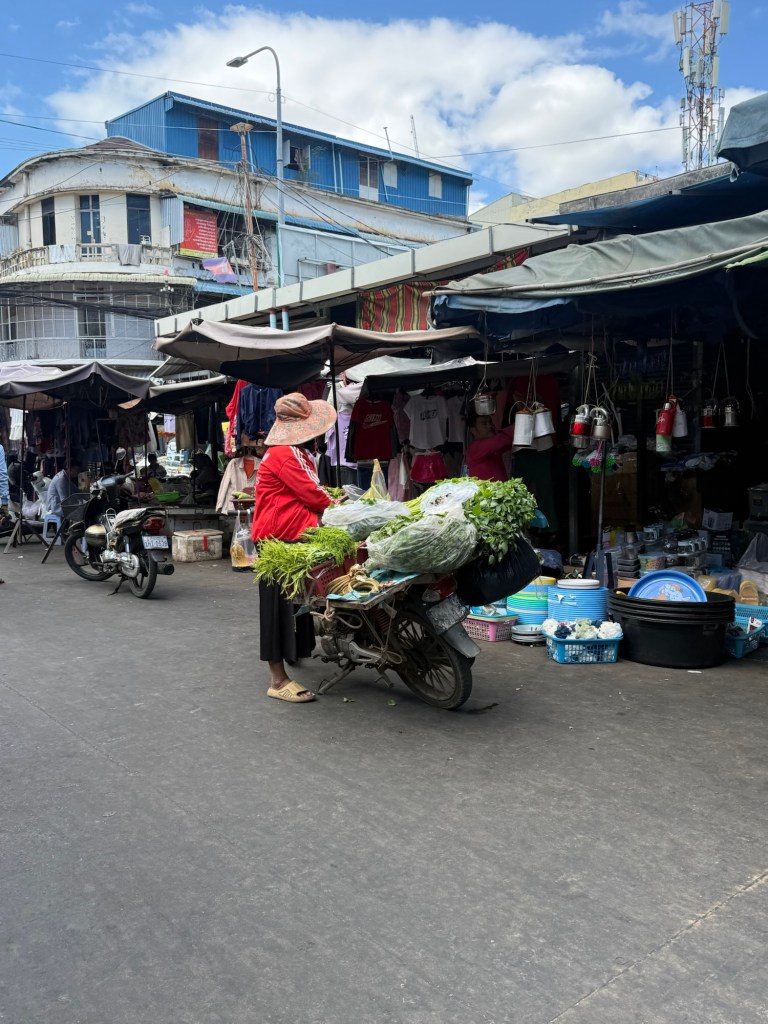
After we were loaded up on eggs and fruit, we walked over to the National Museum. We walked through lively and stinky market streets. Carts had fresh meat just hanging out. One had a line of tongues along the counter, splayed out like there were making fun of us. I love it all, especially the usage of bikes as mobile market stalls.
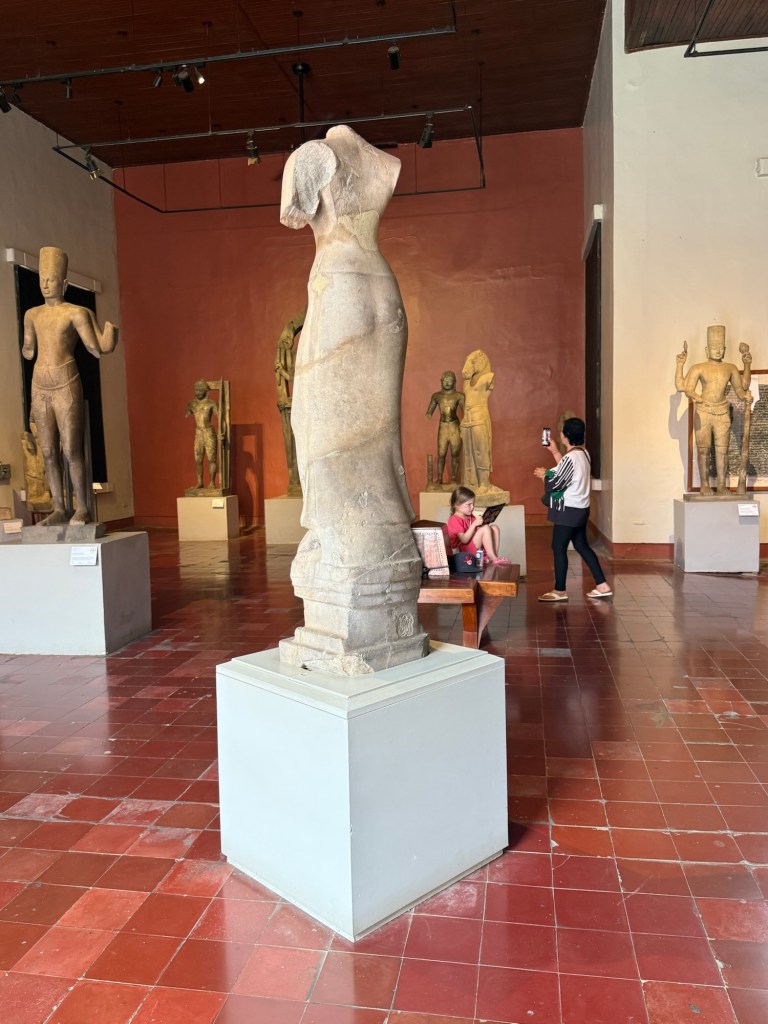
Millie was not enthusiastic about the museum but had a fine time once we were there. It held many of the statues and carvings from the temples we had recently visited. It was cool to recognize the styles and to know the stories behind everything.
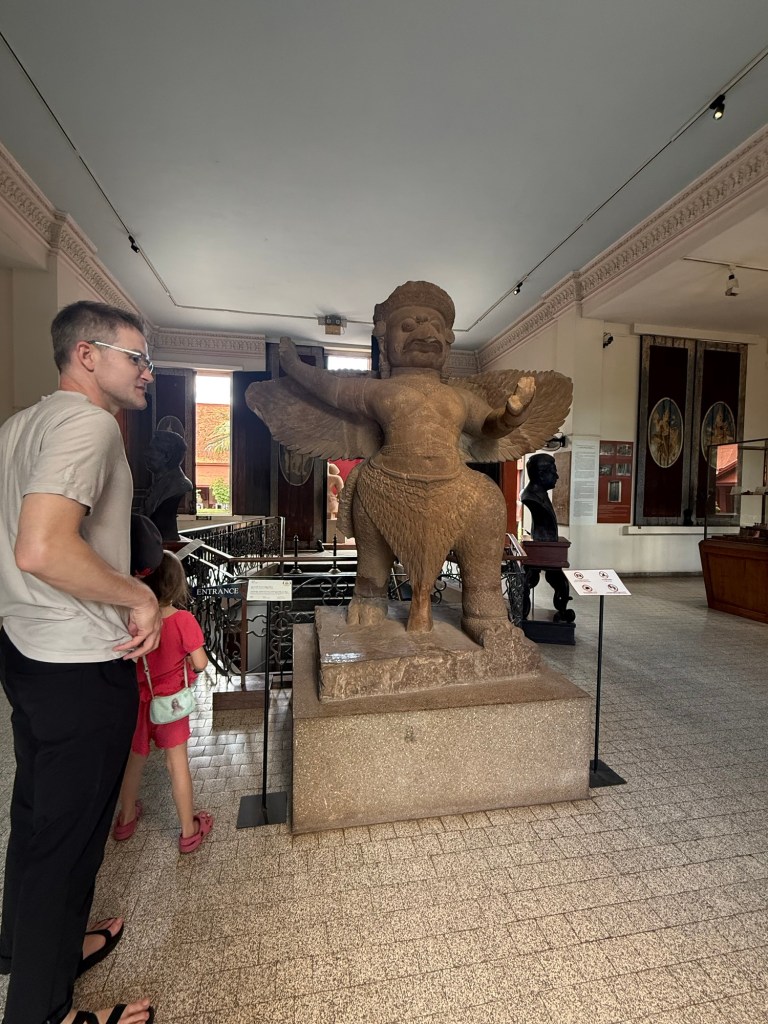
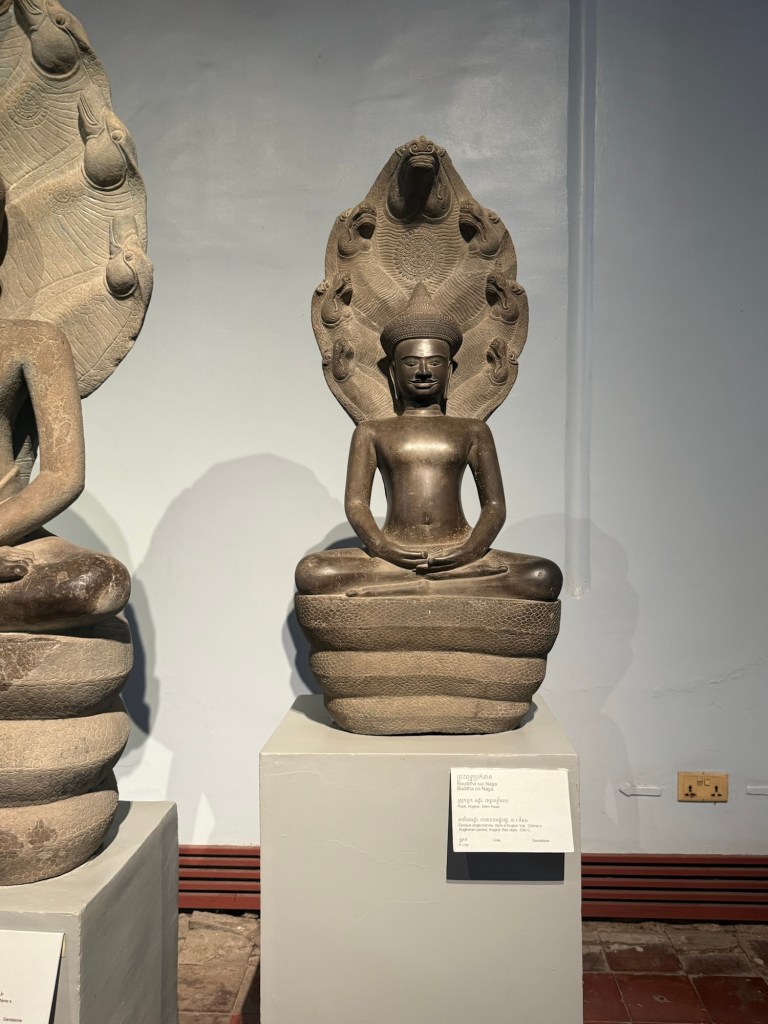
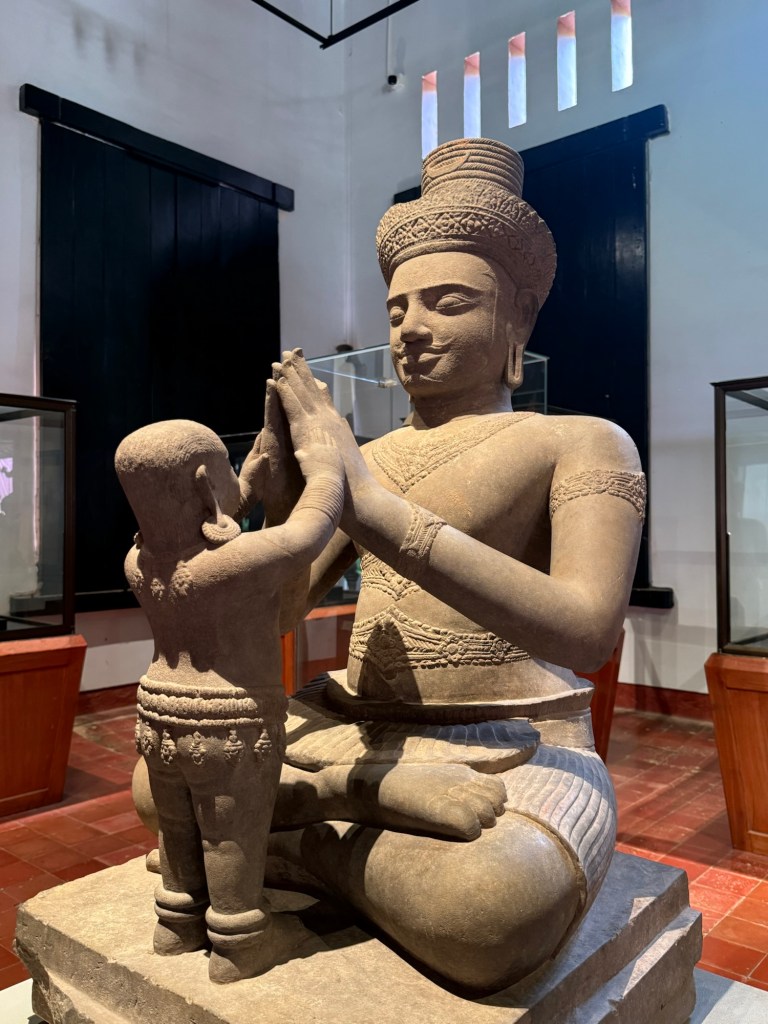
Even though I recognize the need to keep this work safe in a museum, I couldn’t help but think how much cooler they would look in their original locations on the temples, and how much more amazing visiting the temples would have been if these were in situ.
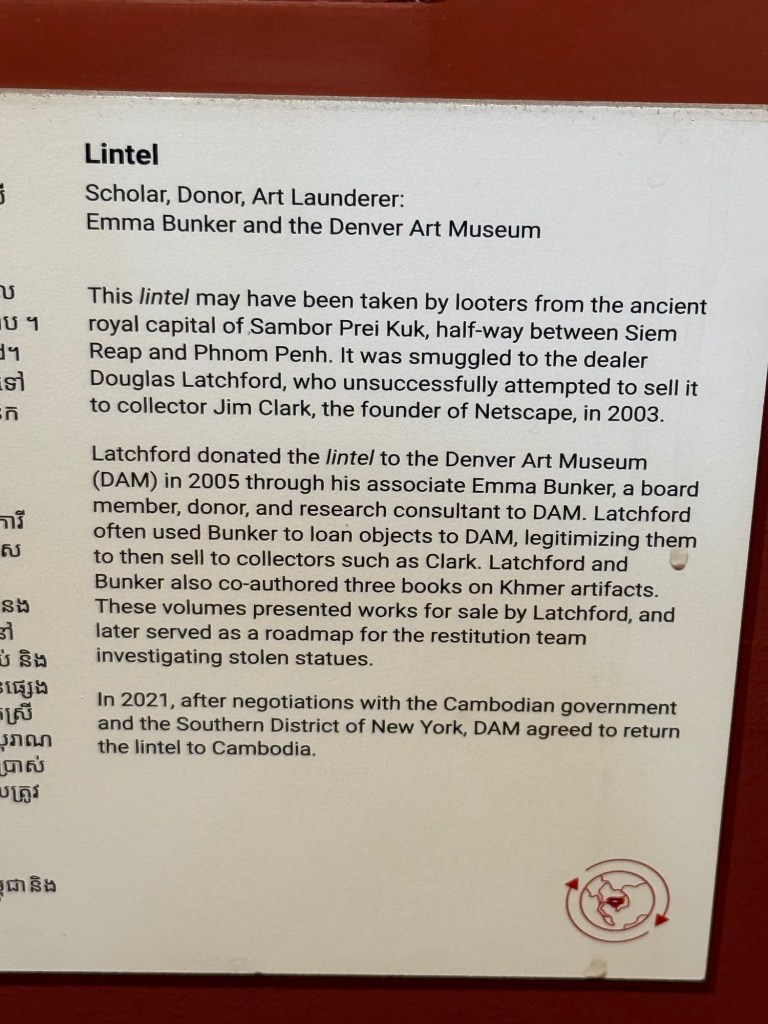
Much of the museum was dedicated to telling the story of how these pieces had been looted and smuggled across the world, and the heroic story for how Cambodia got them back. “Scholar, Donor, Art Launderer” made me laugh on this sign. So much (well-deserved) shade.
Millie hung out on the bench and did some drawing, the usual.
After the museum we walked back to the hotel, and Nick headed out to visit the Killing Fields and the genocide museum. Usually we are proponents of letting kids see into the dark shadows of humanity, but this felt like a step too far. This genocide barely makes sense to us, so I’m not sure how we could explain it to her. Additionally, Millie has developed a fear of skeletons, and real human bones feature prominently. It just didn’t seem worth it.
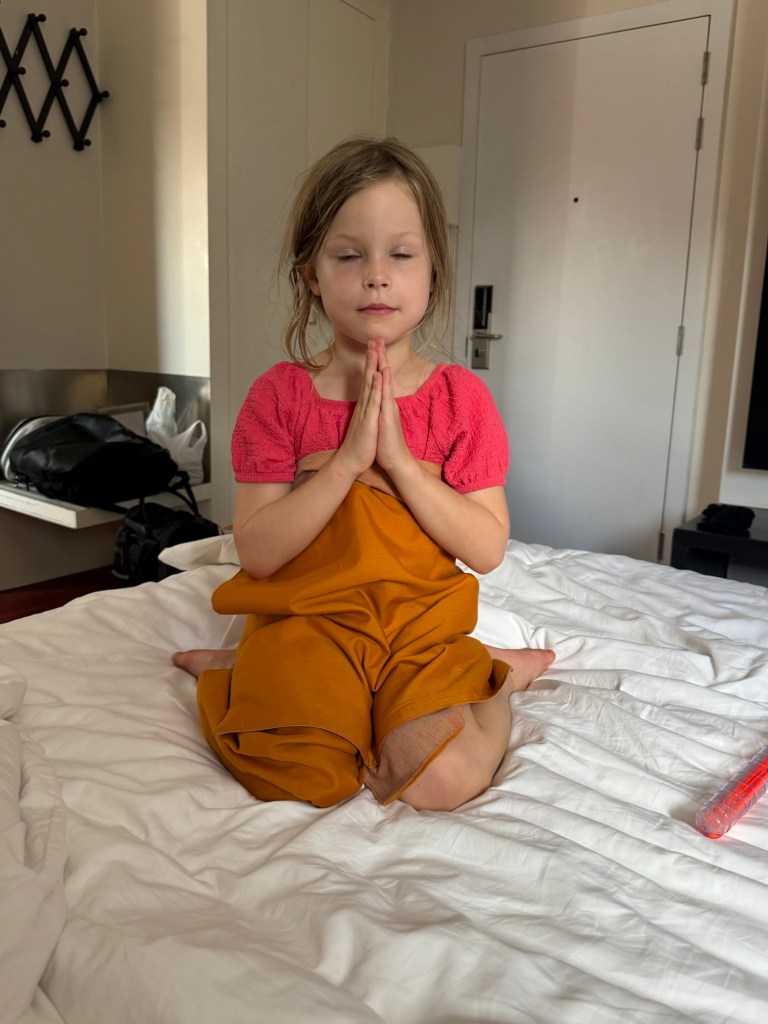
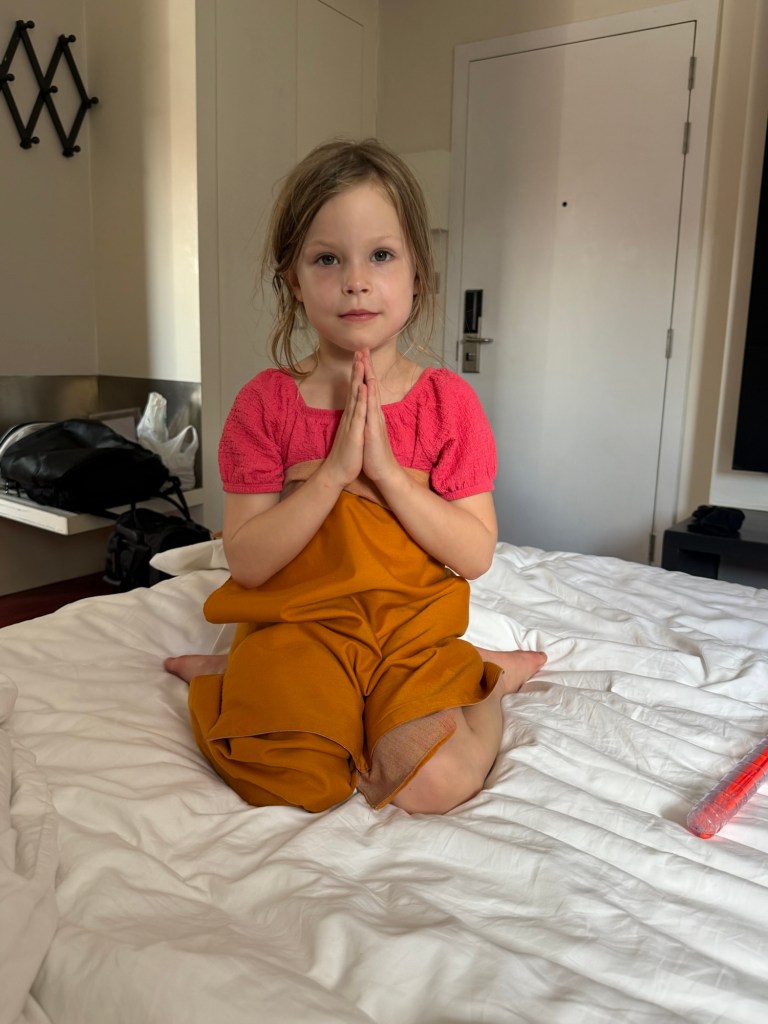
Millie and I stayed in the hotel room and played for 4 hours. We had a great time dancing, drawing, making Christmas cards, playing with dolls, reading, and playing card games. Somehow the time passed quickly.

Meanwhile, Nick took a tuk-tuk to the museum. When his driver heard where he was going, he told him the story of his father and grandfather who were wrongly accused by a jealous neighbor, and then killed. It was a timely reminder of how recent the history was, and that with 25% of the entire country being murdered, almost everyone here was affected.
He said the visit was more horrific than we even predicted. As he walked the path around the killing fields he noticed bones, teeth, and clothing poking up through the dirt. When he asked the guard about it, they said it happens every time it rains and that they try to “clean it up” a few times a year. Just horrifying.
From Nick—
Two thoughts about my day:
1) When I was at Cheoung Ek I listened to the audio guide they provide with the ticket. The tour has multiple stops around the site, which is a former Chinese graveyard. The tombstones are gone so it now looks like a lawn with a series of large square depressions in the ground. Each depression is a different mass grave that contained hundreds of bodies. There are 129 graves at the site. One grave was for Khmer Rouge soldiers accused of sabotage, another contained all women and children. When it rains bone fragments, teeth, and clothing still surface. At the back of the site is a pond that formed after the conservators built a dyke to protect the mass graves from eroding into a nearby lake. The pond has lily pads and a little covered pavillion, and there’s a tree-lined walking trail with benches circling the pond. At that point in the tour the audio guide suggests that the pond would be a good spot to sit and listen to some survivor accounts. As I listened to people describe being brutalized by their own countrymen and the effect that trauma had on the people who took part in and witnessed it, I couldn’t help but be taken in by the scenery. It was so peaceful. It was warm and sunny and there was a light breeze blowing through the trees. Birds were singing and I watched a fish gulp a bug at the surface of the pond. The audio guide explains that at the bottom of the pond lie the remains of hundreds more people. Around 20,000 people were killed and buried at Cheoung Ek, but after recovering the remains of over 8,900 individuals, investigators decided to let the rest stay buried. Across the pond is a giant old tree. When I got to that part of the tour I learned that it’s called the “Killing Tree” because guards would grab infants by the legs and smash their heads on the side of the tree before tossing them into the pit with their mothers. Despite all that darkness, I will probably always remember the beautiful day. Maybe that’s my way of coping.
2) Photography was allowed on the grounds, but when I found myself taking pictures of molars and scraps of clothing that had surfaced in recent rains I realized it was probably time to put away my phone.
He came back to our hotel room and had to immediately transition from humanity’s worst to humanity’s best: a huge hug from Millie. She missed him after just a few hours apart. Going home and separating when school starts will be interesting.
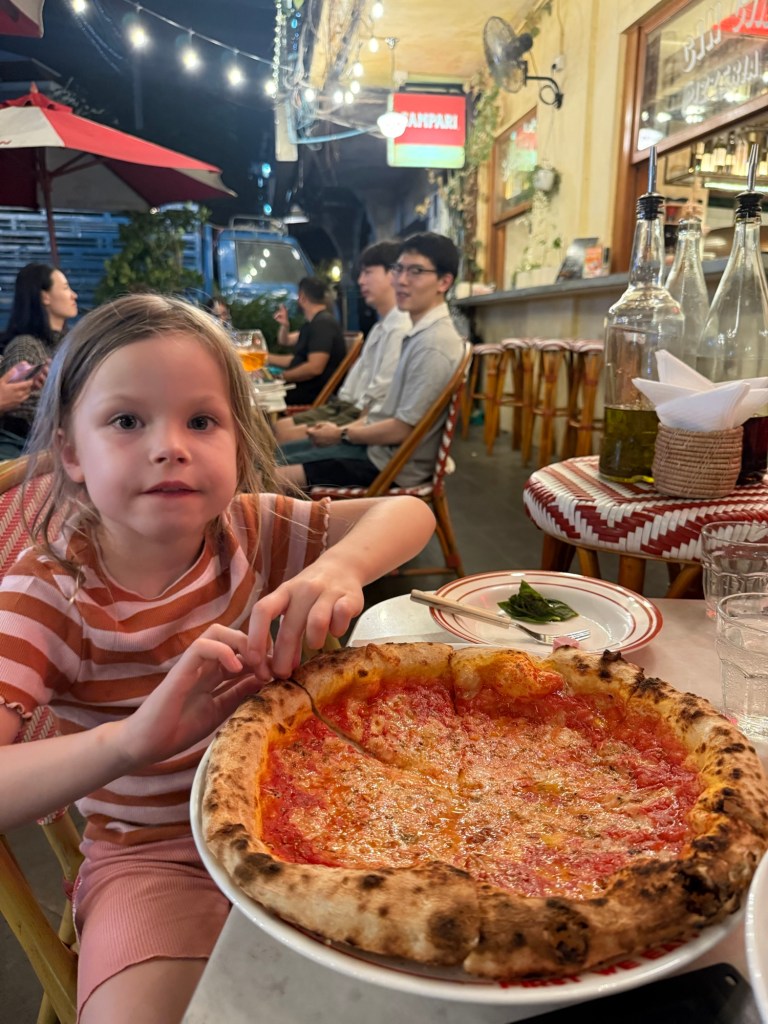
We dragged her out of the room for dinner. We were walking to an authentic restaurant and went past a very aesthetically pleasing Italian cafe. We looked at each other and decided to just stop there. Pizza two days in a row, a real treat for Millie. The pizza was excellent, again.
 Sheplers 🤝 the world
Leave a comment